



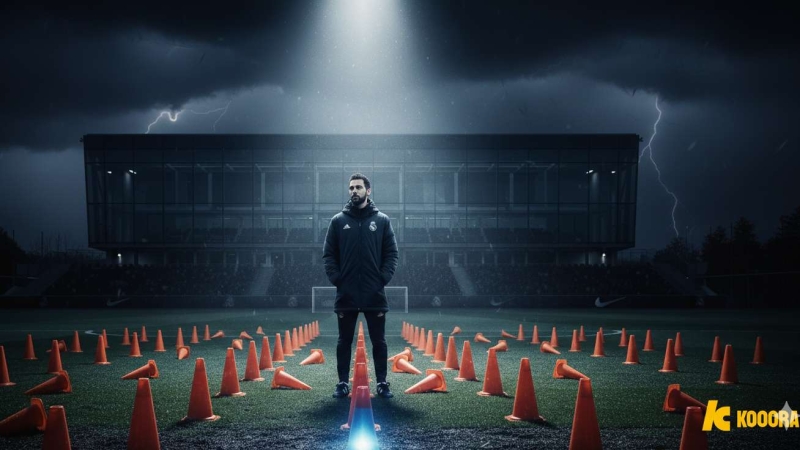
In a significant turn of events, Xabi Alonso has departed from Real Madrid, whether by resignation or dismissal remains a matter of debate. Nevertheless, his tenure concluded predictably, joining the ranks of those who attempted to defy the prevailing norms at the club, only to find themselves departing prematurely, a fate not unlike that of Julen Lopetegui.
A swift decision came to fruition; less than 24 hours after a defeat in what was termed a “second-rate tournament,” Alonso’s exit was confirmed, paving the way for his successor, a young coach with minimal coaching experience, having only led lower-tier youth teams. His history as a player is significantly less illustrious than that of his predecessor, suggesting that his only role in this scenario is that of the “obedient boy” following the directives of Florentino Pérez.
However, the aspirations of the “emergency coach who will send Europe into a state of emergency” will not materialize with Arbeloa, unlike the success achieved under Zidane. Instead, Arbeloa’s fate may mirror that of Santiago Solari, who took over mid-season after Lopetegui’s dismissal, only to witness the team lose all possible titles by March, subsequently spending the remainder of the season in a “lengthy preparatory period” with the returning Zidane.
What could be the reasoning behind this dismantling of dreams for the “Merengue” supporters? Is this merely a viewpoint from a critic who dislikes seeing the team adorned with trophies, or is reality asserting itself, even when the opposing party is Real Madrid itself, which fails to acknowledge the existing circumstances, levels of performance, or even strategies on the pitch?
While we lack foresight, it is evident that even a “heroic persona” necessitates a dose of reality to underpin its ability to achieve what everyone perceives as impossible; this support is currently absent, neither with Ancelotti in his twilight seasons nor with Alonso, and certainly not with Arbeloa.

More Read


Copa del Rey
Albacete vs Real Madrid
January 14, 2026 – 23:00

Convergence of Failure Factors
Historically, in the modern era of Real Madrid—and perhaps throughout its entire history—it has been acknowledged as the realm of the “Galácticos,” a constellation of gifted stars capable of making a difference and securing trophies. However, the adage “too many cooks spoil the broth” holds true; success requires additional factors.
In addition to the heroic character and exceptional individual talents, Real Madrid has always needed individuals who “till the ground” for the stars to shine and deliver in crucial moments. While Cristiano Ronaldo dazzled in attack and Carvajal and Marcelo surged down the flanks, Casemiro, Modrić, and Kroos fulfilled defensive roles, with the latter two possessing unique artistry that distinguished them from the rest.
As Bellingham chased the ball behind the opposition, anticipating a magical pass from Toni Kroos or Luka Modrić, Valverde was tirelessly running to the point of exhaustion for the sake of Real Madrid. The equation was straightforward: exceptional attacking talents (even from defensive assets like Sergio Ramos), one or two artists like Modrić and Kroos, and the remainder consisted of “muscle” that defended and pressed like Valverde.
This balanced equation has collapsed entirely with the retirement of Kroos and the departure of Modrić. The addition of Kylian Mbappé came without defensive effort, depriving the team of “artists” while merely adding a “star,” leading to an imbalance. Unlike other teams, Real Madrid requires only a minimum to secure titles, yet this minimum has diminished year by year, reaching a point of near absence in the current season.
The Challenge of Competing with Flick
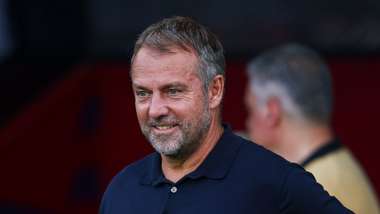
If we set aside the period of Zinedine Zidane, during which Real Madrid boasted superior and more balanced elements, the club has managed to clinch the Spanish league and the UEFA Champions League twice while possessing only the “minimum.” However, what truly assisted them was the absence of fierce domestic competition.
It is true that Barcelona did not encounter Real Madrid in the Champions League, nor were they a legitimate competitor for the title, having exited in the group stage during the 2021-2022 season. However, the lack of local disturbances made the European mission significantly easier.
In Ancelotti’s inaugural season, Barcelona was struggling after Messi‘s departure and lacking depth in their squad, starting the season with Ronald Koeman, who “did everything he could to erase his history as a player,” and later bringing in Xavi to rescue the team and return it to the top four. During that time, Real Madrid secured the “La Liga” title without opposition, as Atlético Madrid typically does not pose a long-term threat.
As we approach the final stages of Xavi’s tenure in the 2023-2024 season, injuries and uncertainties have strained the relationship between the manager and Laporta, leading the team into a phase of fluctuation, compelling them to fight merely for the second position, thereby allowing Real Madrid to soar at the top alone.